


Min Bui
CRO Strategist
Table of Contents:
Project Overview
AYO is a health-tech brand focused on circadian health, built around wearable light-therapy glasses and a companion app.
This redesign focused on making the product easier to understand across the buying journey, especially where circadian science, safety, daily use and app value competed for attention.
Disclosure: This project was completed by Min Bui before UXphoria was founded. He worked as a contracted UX/UI designer through a third-party agency on AYO's website redesign. UXphoria was not directly engaged by AYO.
Project: AYO Light Therapy Glasses Website Redesign
Role: UX/UI Design, CRO Strategy (as part of an agency team)
Engagement: Contracted via third-party agency (Upwork)
Note: UXphoria was not involved in this project. This case study reflects individual work prior to founding the studio.
Timeline: Pre-UXphoria
The Client
AYO is a health-tech brand built around wearable light therapy and circadian health.
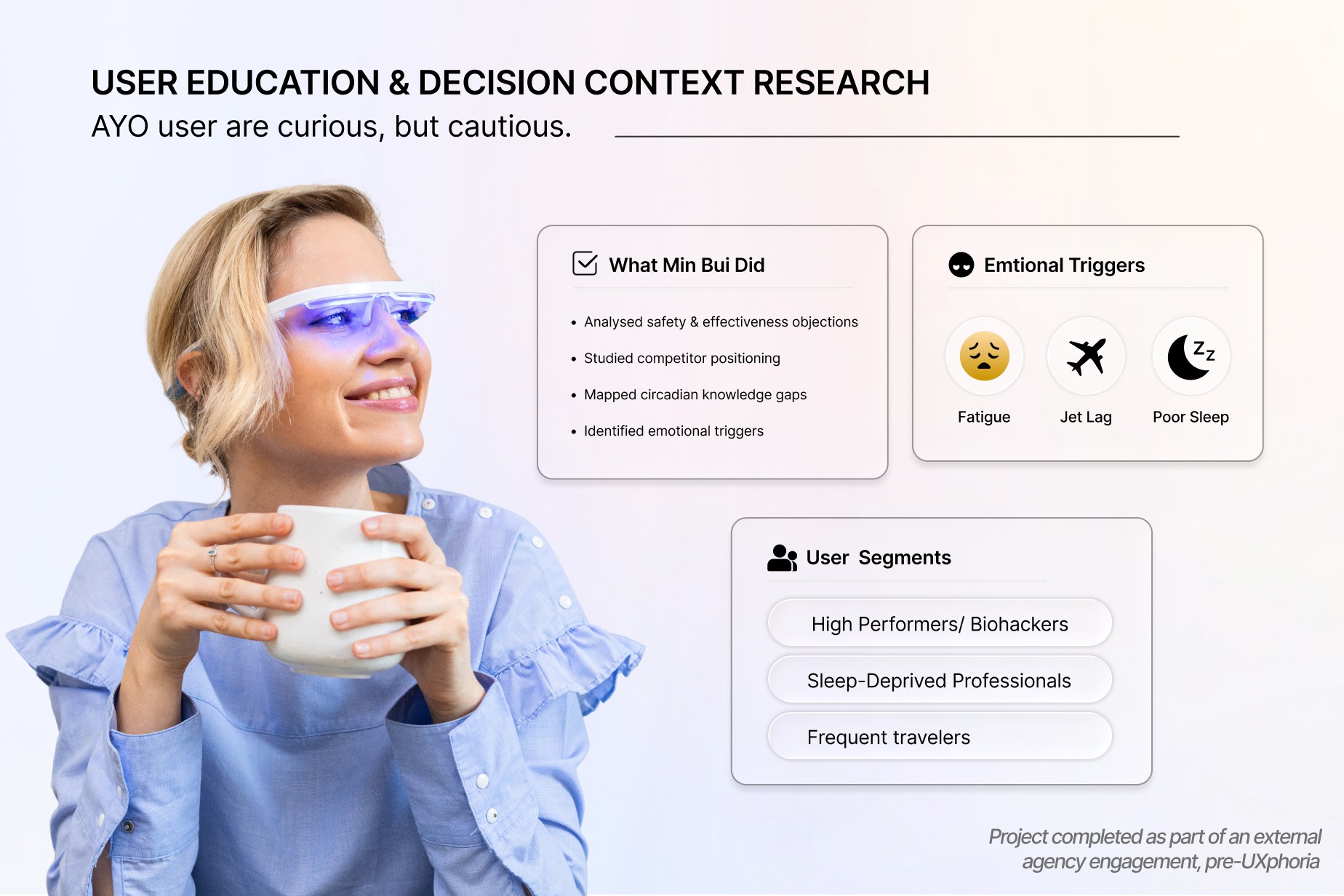
The product asks shoppers to understand several things at once: what circadian rhythm is, why light timing matters, how the glasses fit into everyday life, and what the companion app adds to the experience.
The product and science story were already distinctive. The challenge was making that story easier to follow without stripping away the substance behind it.
Product value could feel technical before it felt practical
Scientific explanation became dense early in the journey
Sleep, energy and mood needed a clearer connection to daily use
The role of the app was easy to miss
Safety and evidence needed clearer context around decision points
Mobile layouts had less room to explain the full story
The Challenge
AYO needed to explain a product whose value depends on understanding a mechanism most shoppers do not think about every day.
1. Circadian Science Needed a Shorter Path to Understanding
Concepts such as circadian rhythm and light timing are central to the product.
But they cannot consume the whole buying journey.
The site needed to explain the mechanism clearly enough for people to understand why AYO exists before deeper scientific detail became a barrier.
2. Trust Had to Appear Where the Questions Appeared
For a wearable used around the eyes, safety, scientific basis and practical use are part of the purchase decision.
Those answers needed to sit closer to the moments that naturally raised the questions, rather than appearing only after long stretches of explanation.
3. The Glasses and App Needed One Story
The glasses and app were explained as separate parts of the experience.
That made it harder to see how they worked together.
The redesign needed to show the app as part of the AYO routine rather than as an unrelated digital extra.
4. Everyday Benefits Needed to Stay Connected to the Mechanism
Sleep, energy and mood were important parts of the proposition.
The challenge was connecting those benefits to how and when the product is used, rather than presenting them separately from the science that supports the product story.
5. Mobile Had to Carry the Same Argument With Less Space
Smaller screens left less room for science, product imagery, reassurance and action to compete for attention.
The mobile hierarchy therefore needed to make the core value legible earlier without reducing the experience to a compressed desktop page.
The Solution
1: Product Story Restructuring
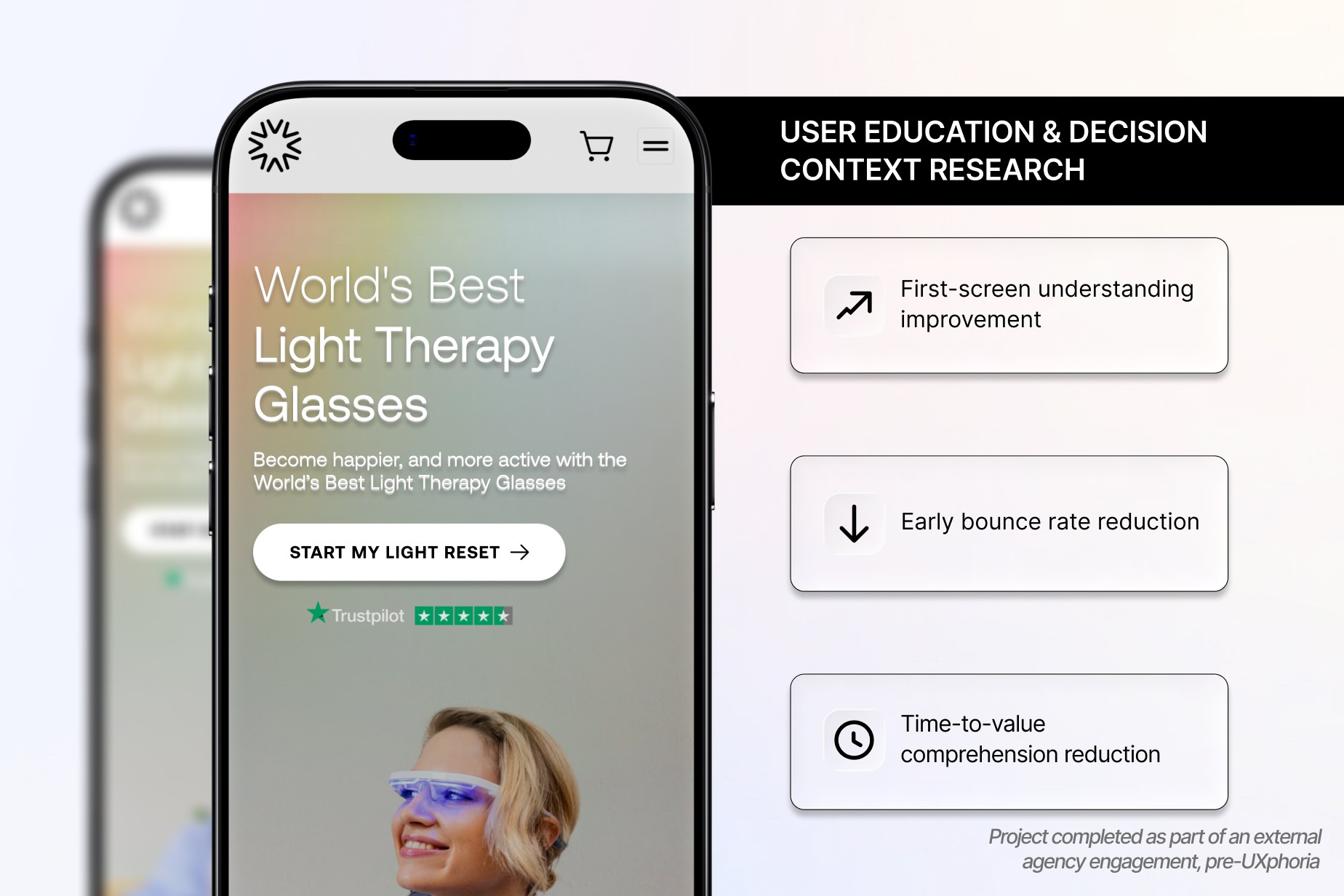
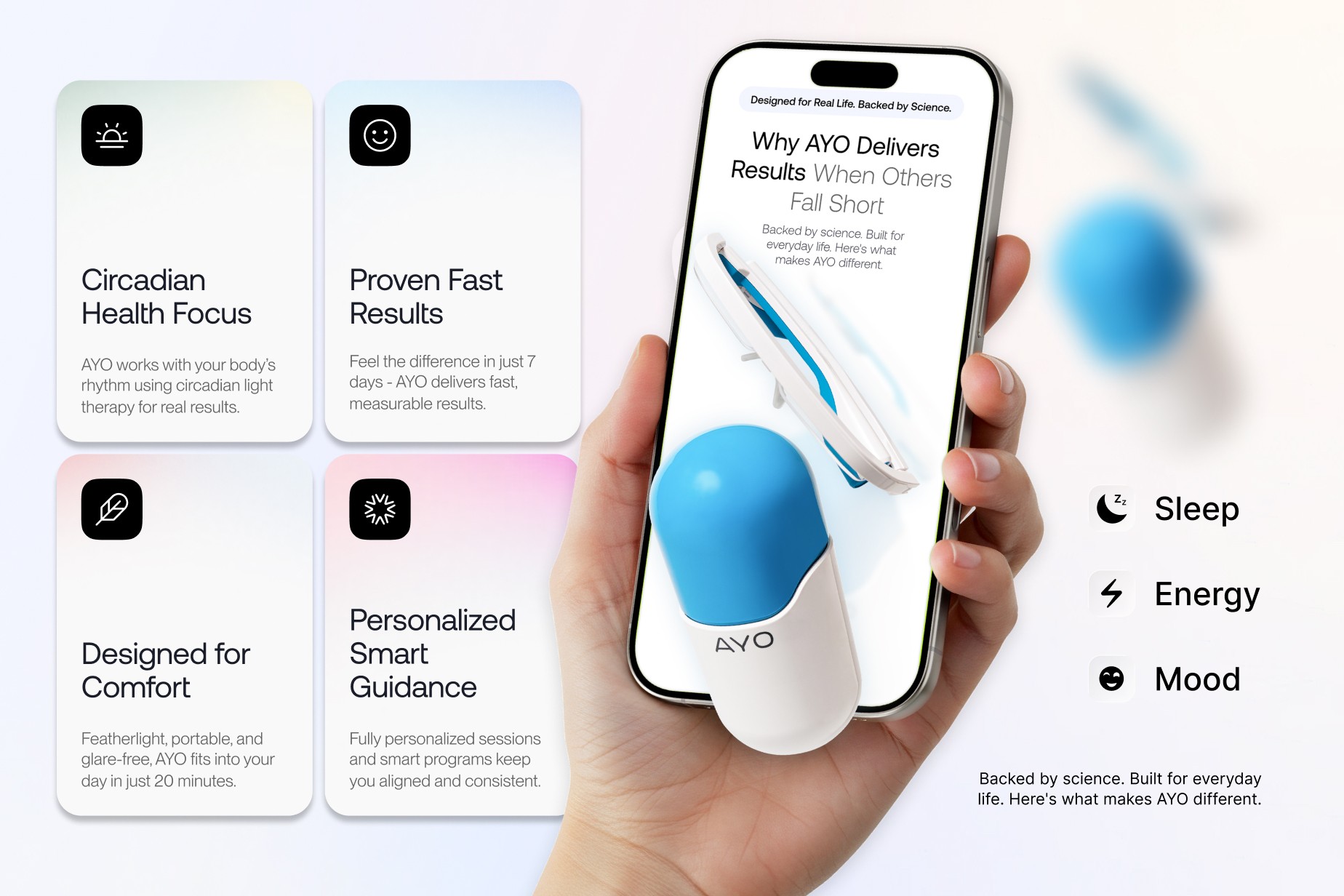
The product story was reorganized around daily use first, followed by mechanism, supporting detail and reassurance.
A simpler framing helped anchor the experience:
Daily light therapy without changing your routine
The core benefit areas were then made easier to scan:
Sleep
Energy
Mood
This gave the science a practical context before asking the reader to process more detailed explanations.
2: Science Simplification
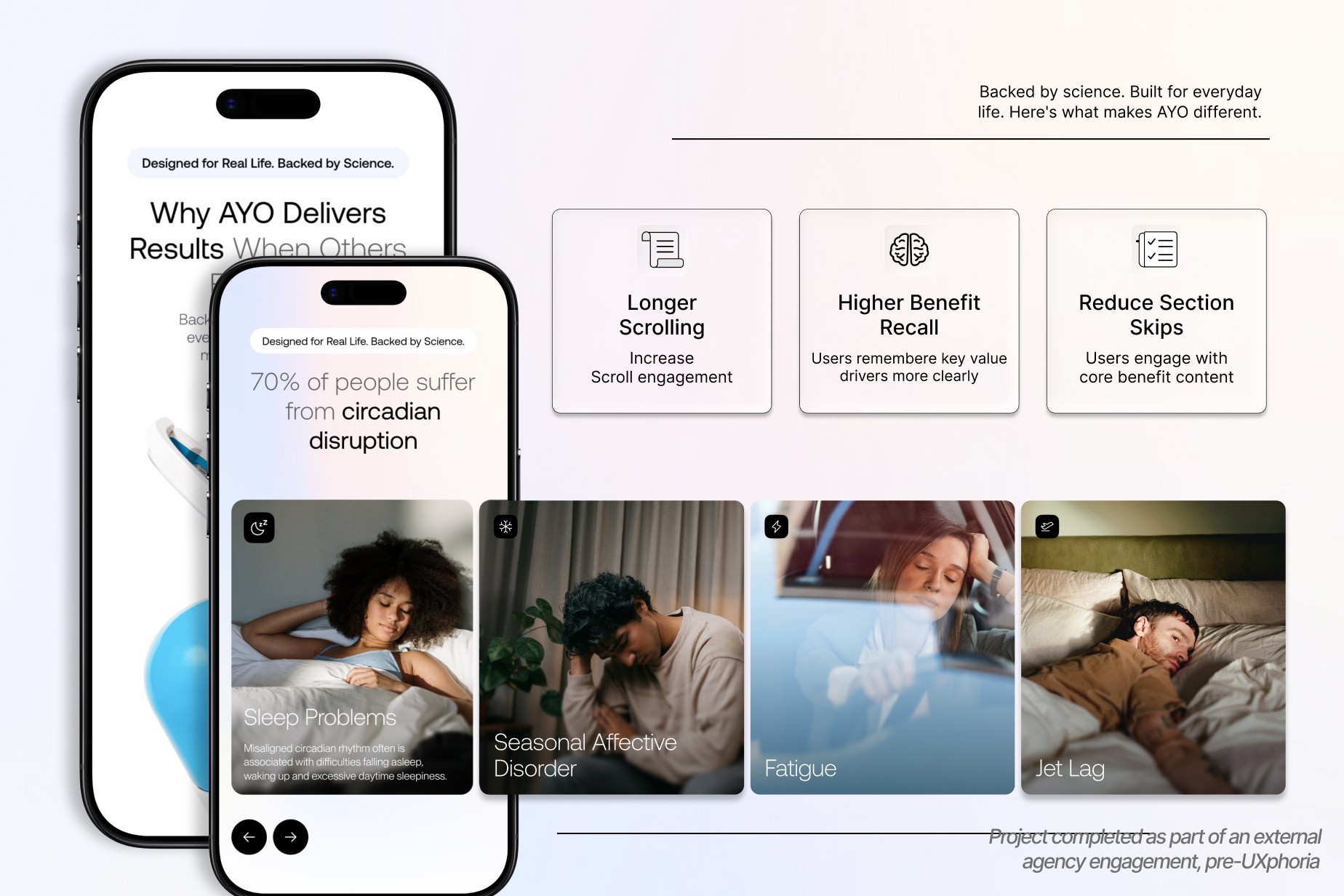
Scientific information was broken into smaller visual and editorial moments instead of relying mainly on dense explanation.
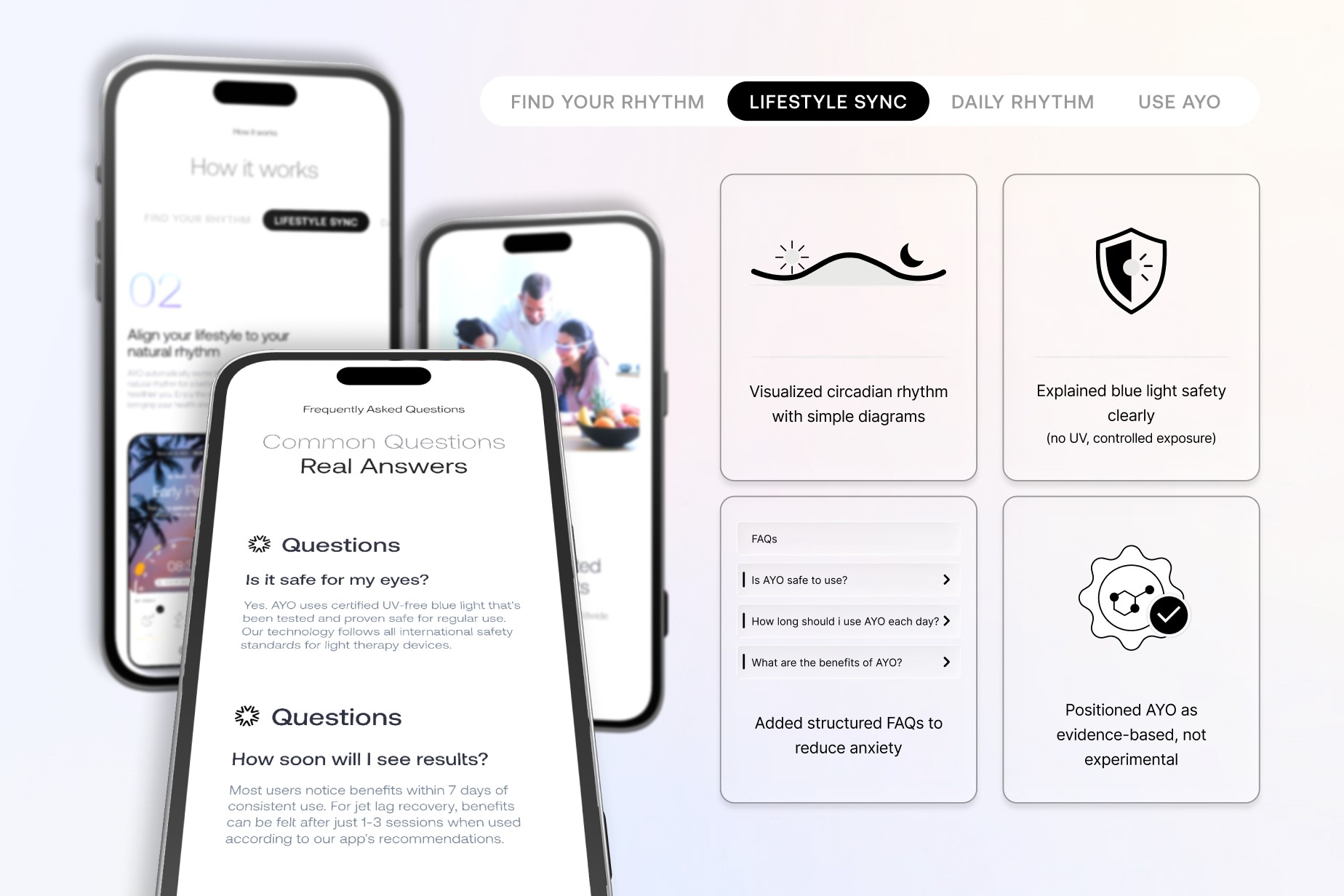
Circadian rhythm was translated into simpler visual diagrams
UV-free and controlled-exposure information was brought into clearer context
Structured FAQs addressed common product and usage questions
The science stayed present, but the page no longer had to explain everything at once.
3: Trust Architecture
Reassurance was brought closer to the points where shoppers were likely to have questions.
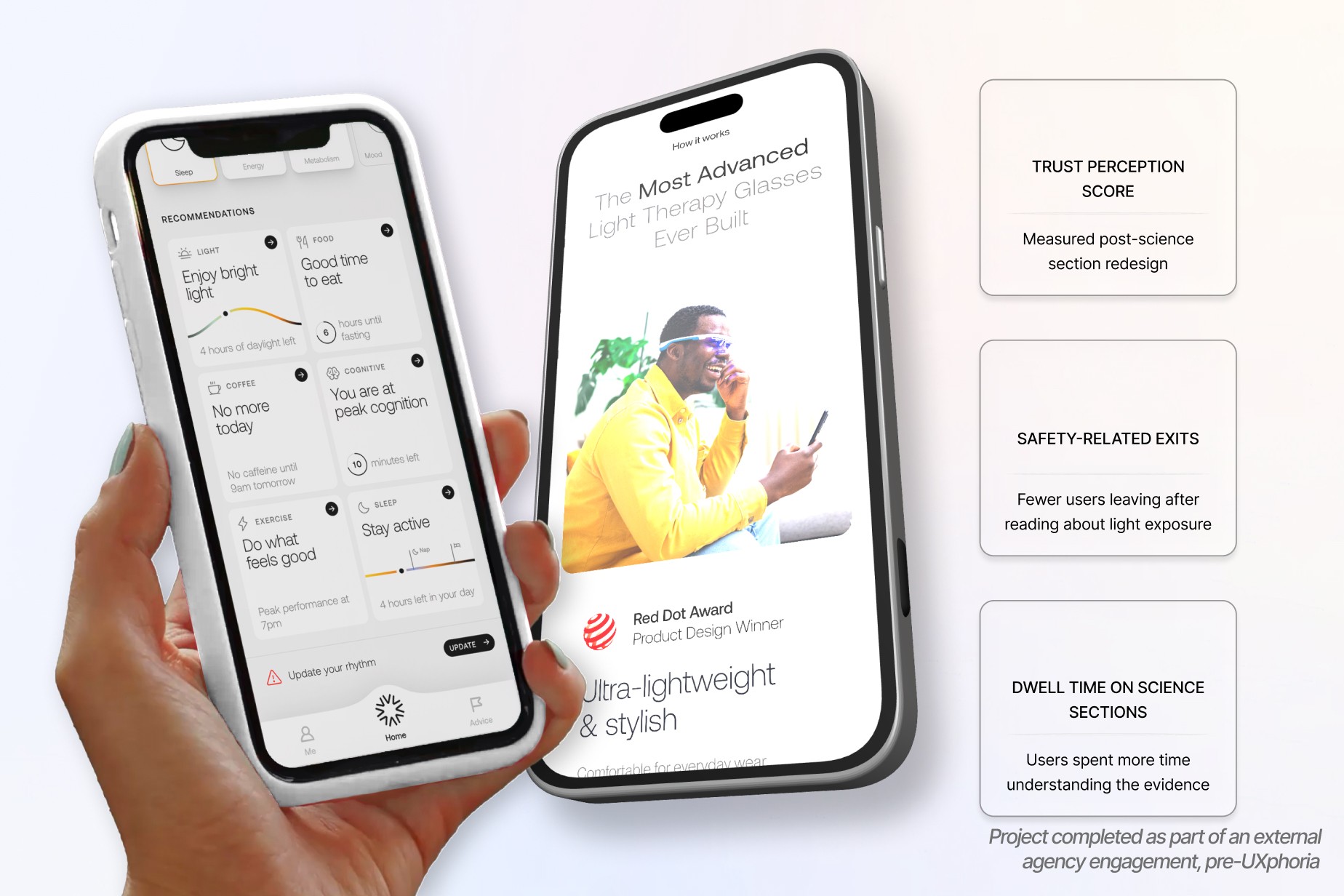
Safety and credibility cues appeared earlier
Supporting evidence sat closer to the claims it related to
Content was sequenced to answer hesitation progressively
The goal was not to add more trust elements everywhere, but to place the right information where it mattered.
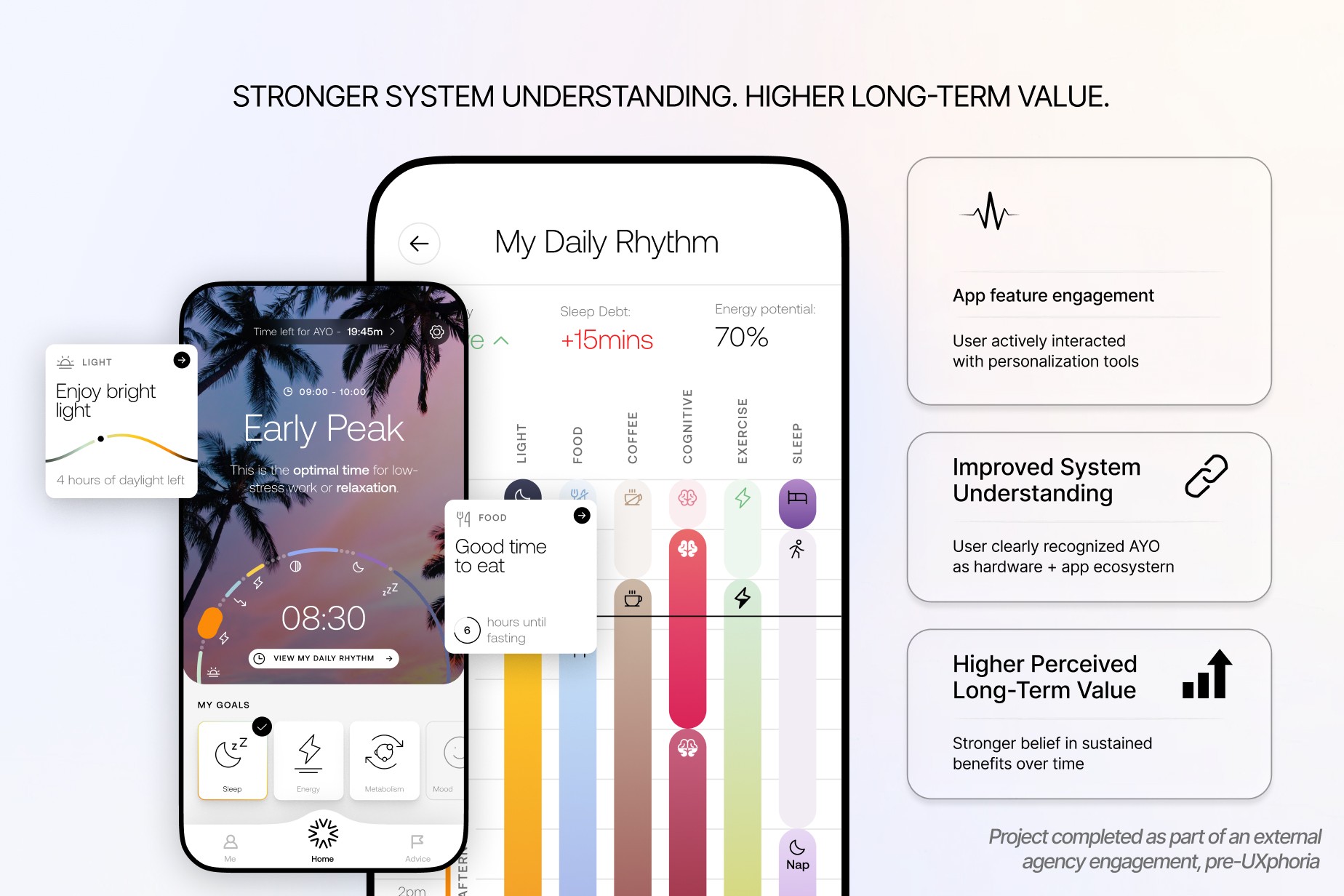
Phase 4: App + Hardware Value Integration
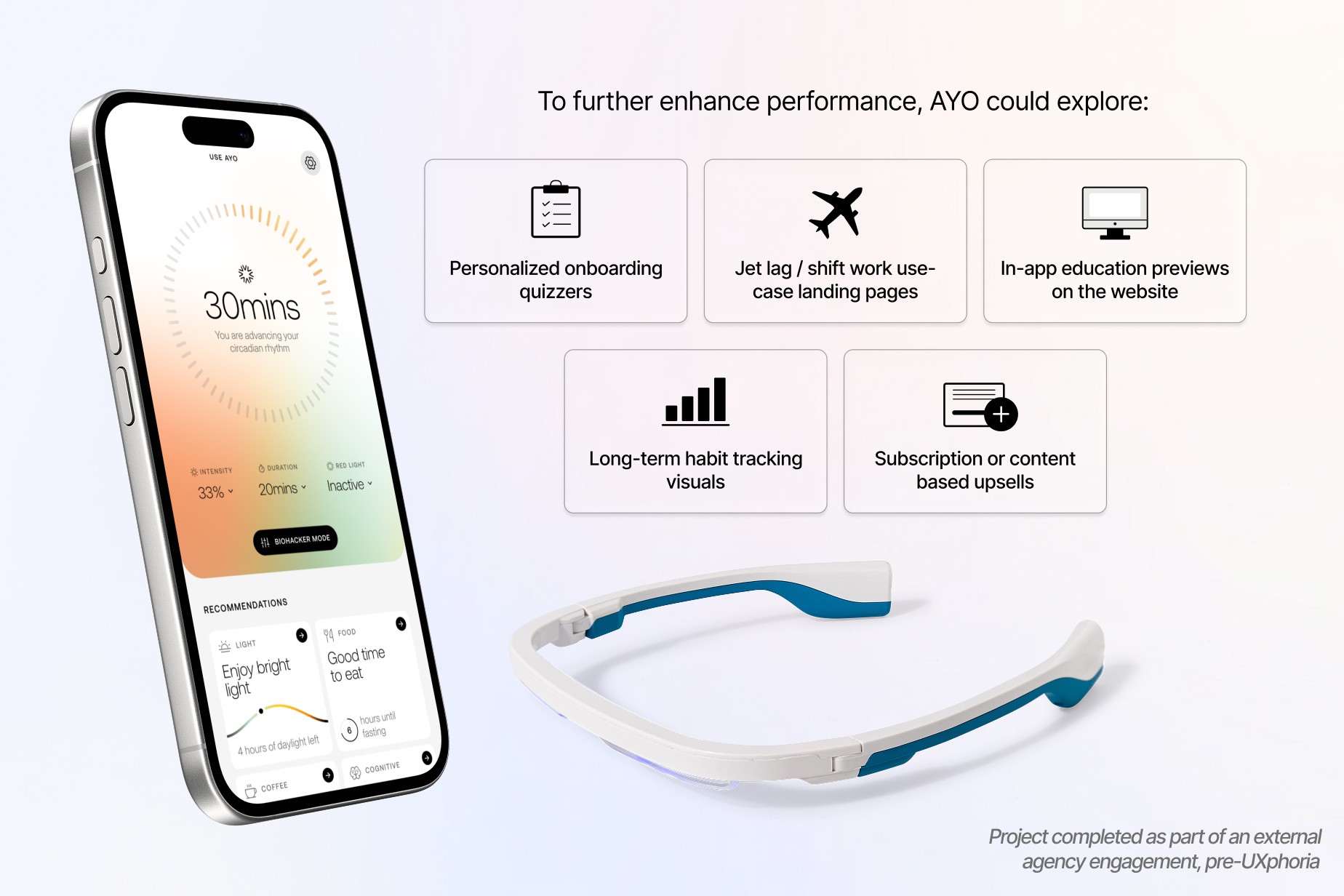
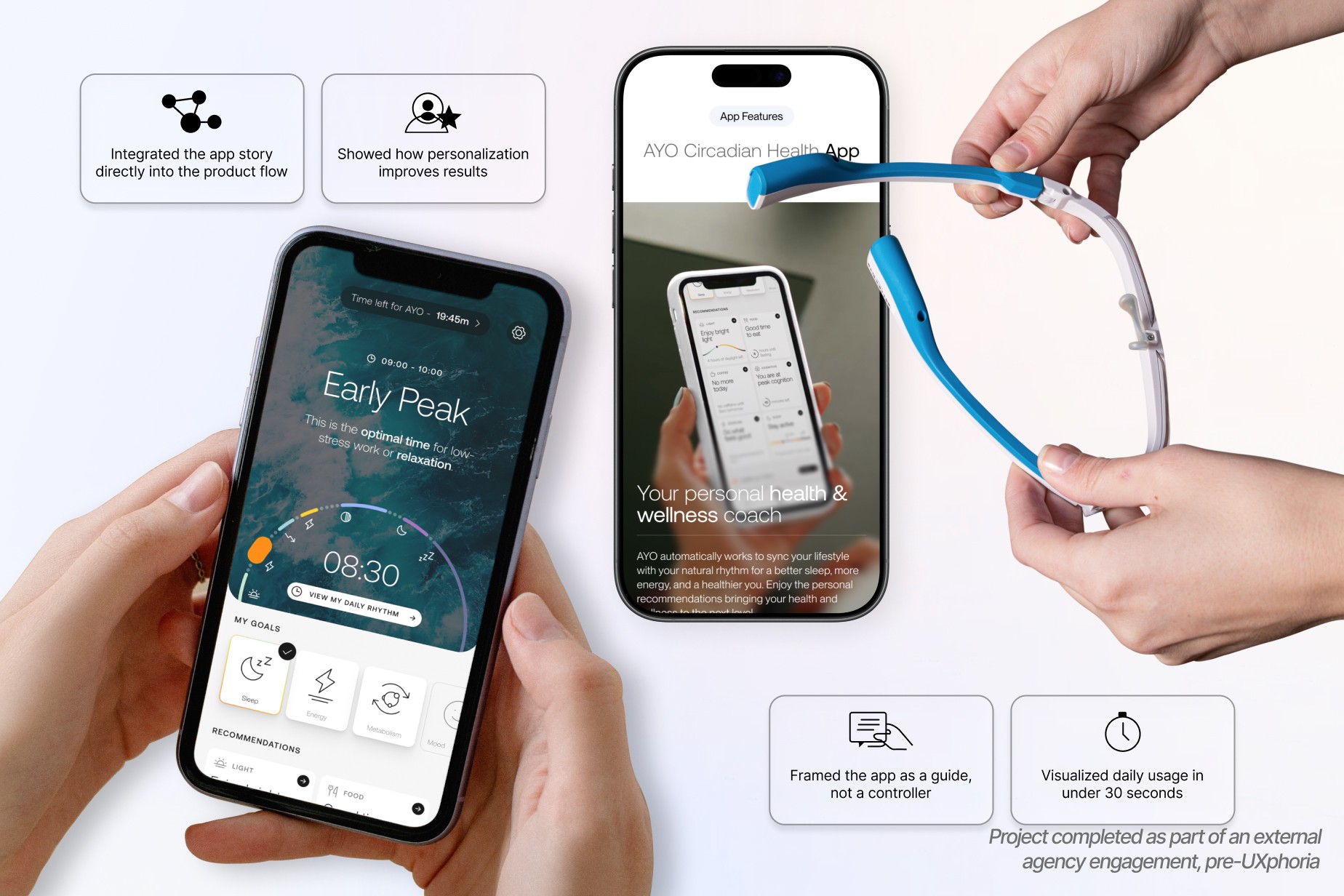
AYO was presented as a connected experience rather than a pair of glasses plus a separate app.
The app was woven into the product journey
Its role in personalized guidance and daily use was explained in context
Product and app visuals showed how the experience continued beyond the glasses themselves
This made the relationship between the physical product and digital layer easier to follow.
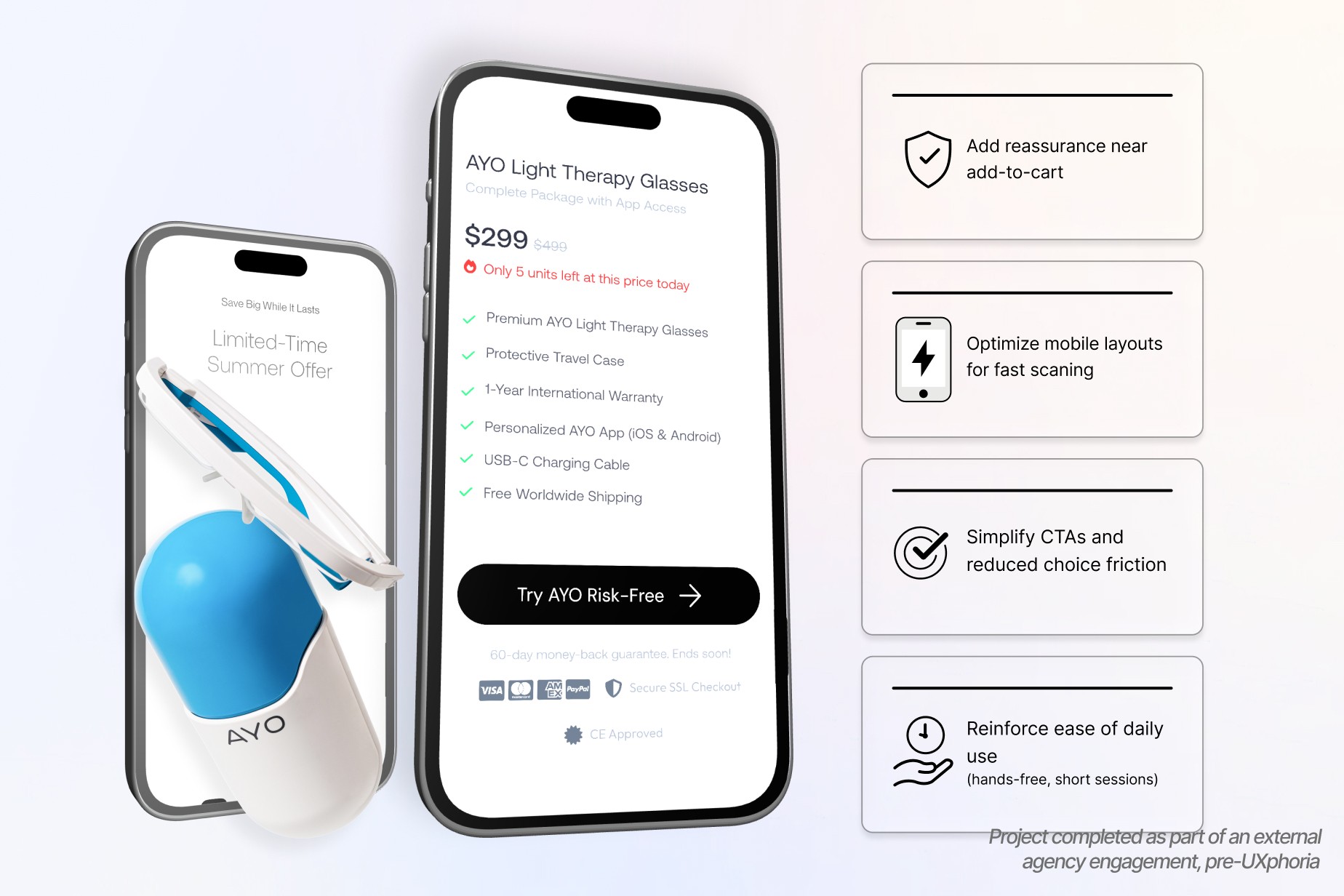
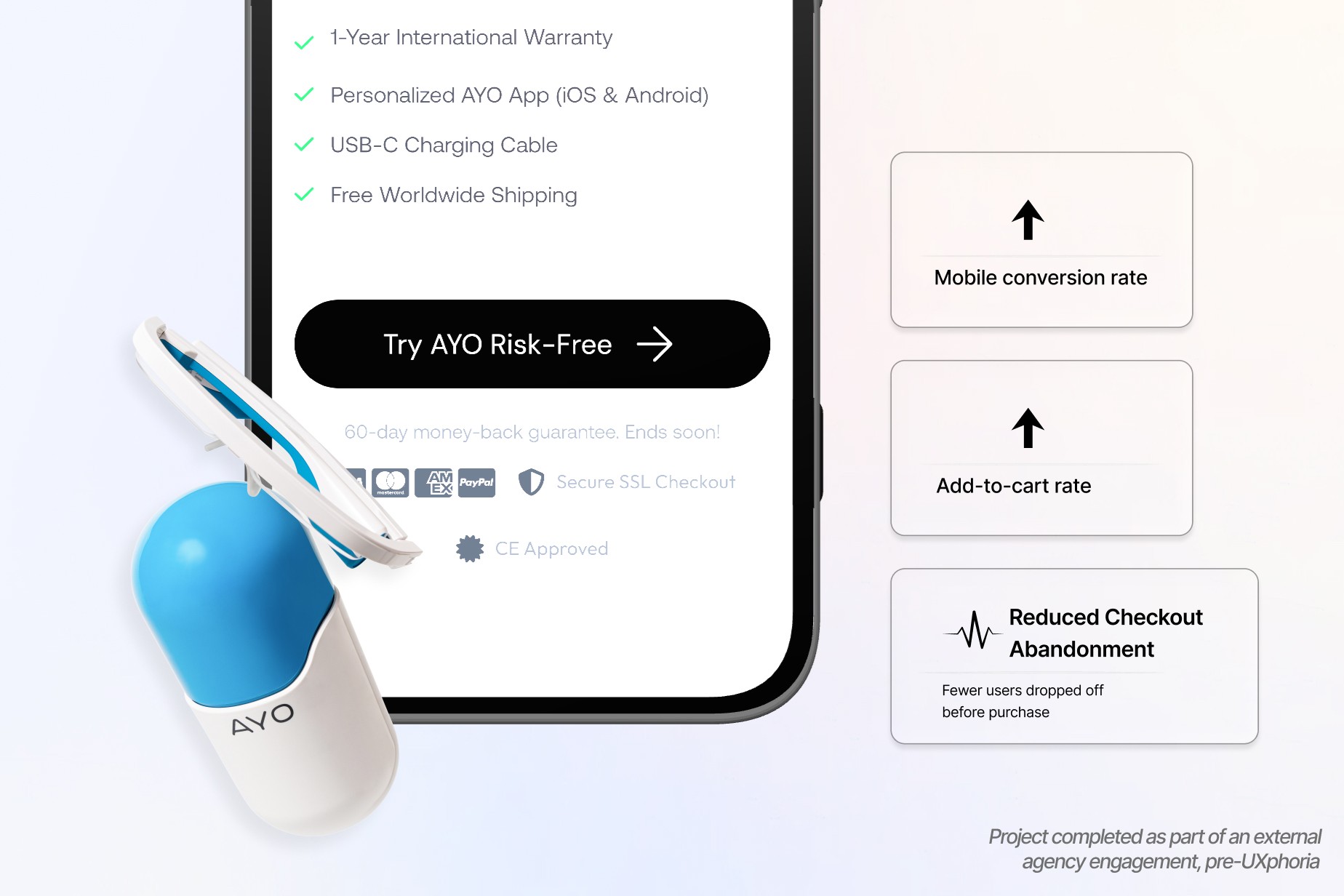
Phase 5: CRO, Mobile UX & Purchase Confidence
The layout was tightened for smaller screens and faster scanning.
CTA hierarchy was simplified
Competing information around key actions was reduced
Ease of use, hands-free wear and short sessions were brought closer to the purchase story
Section order was adjusted so understanding could build before asking for commitment
What the Redesign Delivered
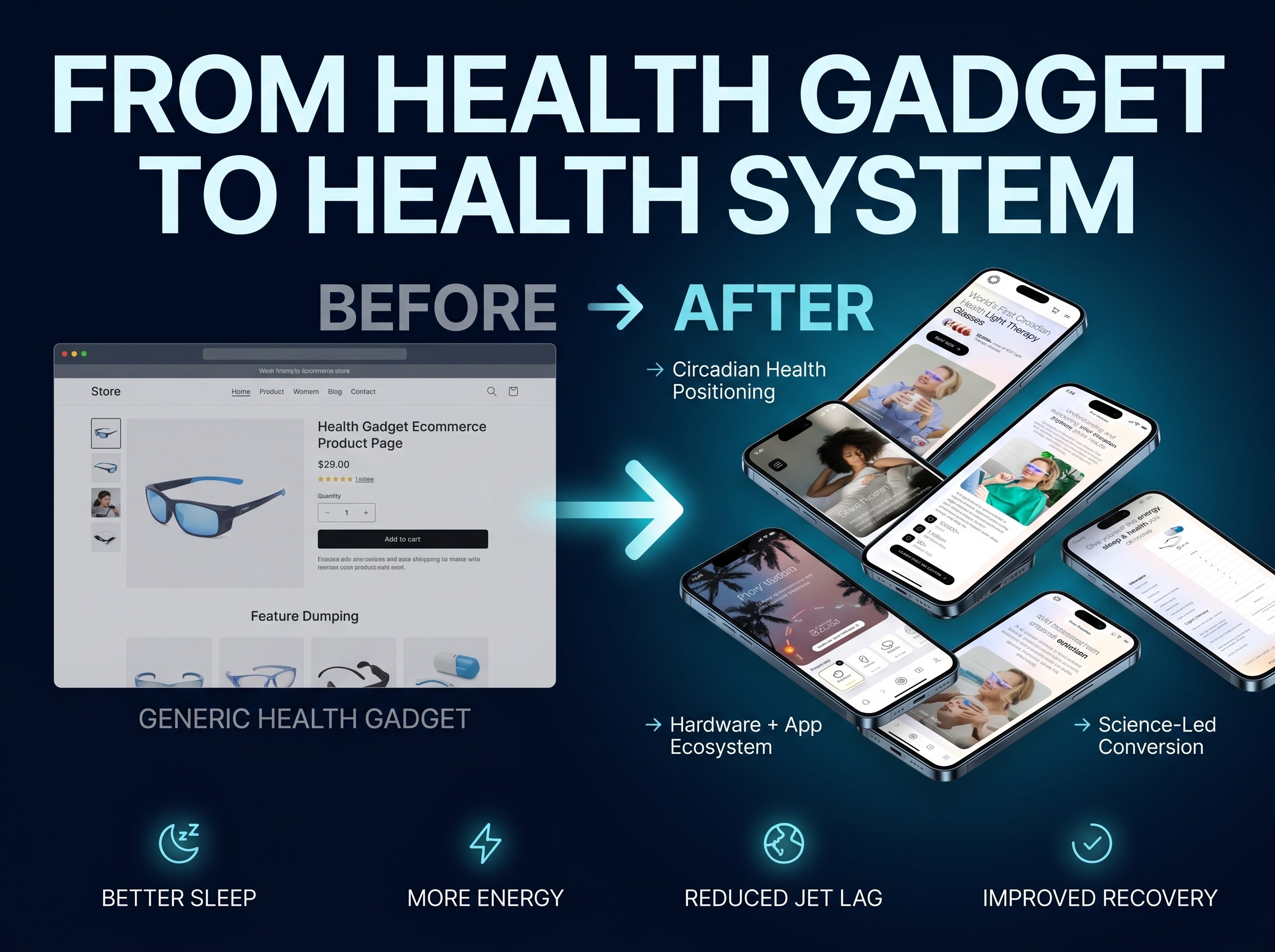
The design work brought AYO's product story, circadian science, safety context, app value and mobile buying flow into a more coherent sequence.
Instead of asking one section to explain the entire product, the experience distributed that work across the journey:
The mechanism was explained in smaller steps
Everyday benefits appeared earlier in the story
Safety and credibility information moved closer to relevant questions
The app became part of the core product narrative
Mobile layouts were structured around scanning, understanding and action
The central design challenge was not removing scientific depth. It was deciding when that depth was useful, and when the shopper first needed a simpler answer.
Future Considerations
AYO illustrates a recurring tension in health-tech ecommerce: a product can be distinctive while its mechanism still asks a lot of the shopper.
For complex wellness technology, the product experience needs to:
simplify the mechanism without stripping away the substance
connect product use with everyday relevance
place reassurance where uncertainty is most likely to appear
Clarity does not require making the product less sophisticated.
It requires giving each part of the explanation the right moment.