
Checkout is one of the most critical stages in any ecommerce store.

Share your store and we’ll provide an initial perspective on your checkout experience.
By the time customers reach the checkout page, they have already explored products, evaluated options, and decided to purchase. However, many purchases are still abandoned at this stage due to friction within the checkout experience.
Checkout optimization focuses on identifying and improving the elements that may cause hesitation during the final steps of the purchase process.
UXphoria helps ecommerce brands improve checkout usability, reduce friction, and create a smoother purchasing experience for customers.
300+ founders trust us
Why Checkout Optimization Matters
Even small issues in checkout can have a significant impact on ecommerce performance. Customers who have already decided to buy may abandon their purchase if the checkout process feels confusing, slow, or uncertain.
Common reasons customers leave during checkout include:
complicated form fields
unexpected shipping costs
unclear payment options
lack of trust signals
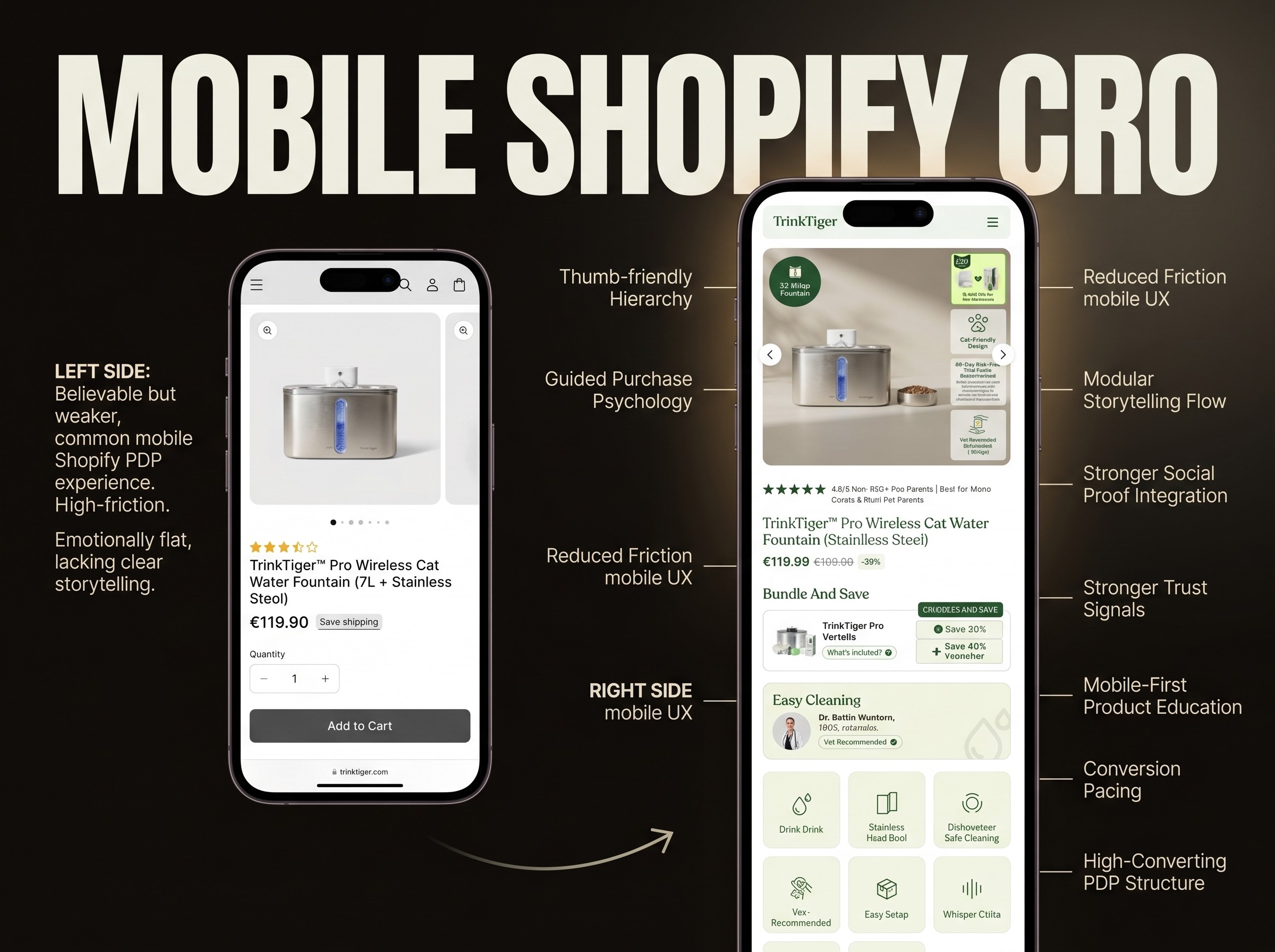
slow or difficult mobile checkout
Optimizing the checkout experience helps reduce these points of friction and supports a smoother purchase journey.
Key Elements of an Effective Checkout Experience
An optimized checkout process helps customers complete their purchase with confidence.
Shopify Checkout Optimization
Shopify provides a strong checkout infrastructure, but optimization is still important for improving the customer experience.
Shopify checkout improvements may involve:
optimizing checkout page structure
improving cart and order summary clarity
ensuring mobile-friendly checkout flow
integrating appropriate payment options
Combined with a well-structured product page and cart experience, an optimized Shopify checkout supports higher completion rates.
UXphoria’s Approach to Checkout Optimization
Checkout optimization begins with understanding how customers interact with the current checkout experience.

Checkout Flow Analysis
We review the checkout flow to identify potential friction points.This analysis may include: checkout step structure form usability pricing clarity mobile checkout behavior Understanding these elements helps identify opportunities for improvement.
Identifying Points of Friction
Certain elements of checkout commonly cause hesitation. Examples include: complex form inputs unclear payment options insufficient trust indicators unnecessary steps before payment Optimizing these areas can simplify the purchasing process.
Improving Checkout Structure
Once friction points are identified, improvements focus on creating a clearer checkout experience. These improvements may include: simplifying form layouts clarifying order summaries improving mobile usability reinforcing trust through design elements The goal is to make the checkout process feel straightforward and reliable.
When Checkout Optimization Becomes Important
Many ecommerce brands consider checkout optimization when they observe patterns such as:
Improving the checkout flow can help address these challenges and create a smoother purchasing journey.
A short description of your store is enough. We’ll reply by email.
Checkout Optimization Process
Checkout optimization typically follows several stages.
Checkout Optimization and Conversion Performance
The checkout experience plays a direct role in conversion performance.